COP31: Why Multilevel Partnerships Matter More Than Ever
COP31 ended without a consensus outcome, but momentum for multilevel climate action continued to grow. With 80 endorsers representing 65% of the global urban population, CHAMP is helping countries, cities, states and regions strengthen partnerships that turn climate ambition into implementation.
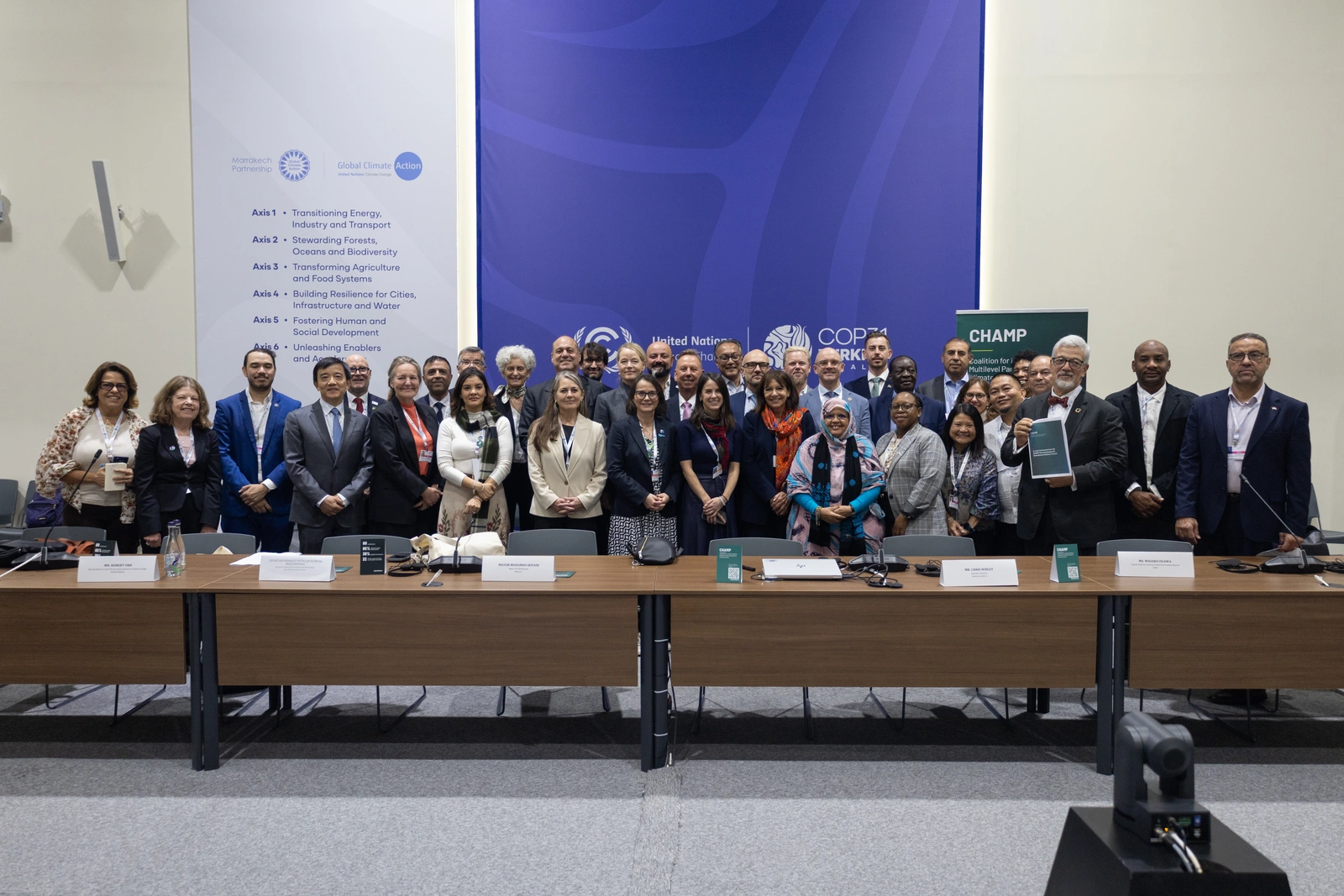
COP31 fell short of delivering the collective ambition the world needed at a time when climate impacts are accelerating and the world is entering an era of 1.5 degrees C overshoot. The political failure to reach consensus on a final outcome document does not mean climate action stands still. When international politics is derailed by narrow national interests, the importance of delivery across all levels of government becomes even more pronounced, highlighting the critical role that subnational and non-state actors play in delivering the transition. Change is not simply negotiated between governments – is driven by people across all parts of the economy and society.
When CHAMP was launched at COP28, it was built around a simple idea: national climate goals are more likely to succeed when cities, states and regions help shape and implement them. A coalition of the doing. Three years later, that idea has become stronger and increasingly embedded in the climate process. Eighty endorsers representing 65% of the global urban population have now committed to strengthening partnerships with subnational governments through CHAMP, reflecting a growing recognition that climate ambition depends on cooperation that happens nation by nation, across all levels of government.
That momentum was evident throughout COP31. Negotiating texts of the cover decision repeatedly recognized the importance of multilevel arrangements for climate action and the contribution of cities, states and regions to delivering national climate goals. Although no final agreement was reached, the prominence of these discussions underscored a broader reality: multilevel governance is increasingly seen as essential to climate delivery.
It is now certain that the world will overshoot the 1.5°C target. When formal negotiations do not reach the level of ambition the climate crisis demands, it becomes a test of leadership for those beyond the negotiating rooms. CHAMP exists to help ensure that climate action continues moving forward through stronger cooperation between national and subnational governments, regardless of the outcome of any single COP decision.
Today, around 80% of Nationally Determined Contributions (NDCs) include urban content, up from less than half during the last round of commitments, and countries are increasingly involving cities, states and regions in climate planning and implementation. During COP31, for the first time, urban issues were part of the agenda of the Leaders’ Summit, with subnational leaders present along with heads of state. Leaders repeatedly emphasized that the question is not whether regional and local governments matter, but how to systematically integrate them into climate governance, finance and delivery.
This message was reflected in the COP31 CHAMP Joint Statement by the chairs of CHAMP’s Steering Group and Subnational Advisory Council, which called for stronger multilevel governance, greater integration of cities and regions into national climate planning, and increased access to finance for implementation.
In Antalya, the CHAMP High-Level Political Dialogue brought together leaders from national and subnational governments, development finance institutions and international organizations to explore how these ambitions can be translated into action. Across the discussions, a common theme emerged: stronger project preparation, greater local capacity and more effective financing mechanisms will be critical to delivering climate action at the scale and speed required.
Also at COP31, World Resources Institute (WRI), with support from the NDC Partnership, announced technical support to four endorsing countries, to work on accelerating implementation by strengthening multilevel climate governance. CHAMP now directly supports 10 countries.
These efforts do not replace multilateral negotiations. They help ensure progress continues when negotiations fall short.
The lesson from COP31 is not that collaboration has failed. It is that stronger cooperation across all levels of government has never been more necessary — and is finding paths forward, despite the breakdown in formal negotiations this year.
As the world looks toward COP32 in Addis Ababa and beyond, CHAMP will continue to support the vast majority of countries and subnational governments committed to moving from recognition to implementation, helping to deliver the transformation needed in a world that can no longer afford delay.