RELEASE: At COP31, CHAMP Leaders Call for Stronger National-Subnational Partnerships to Accelerate Climate Action and Unlock Finance
In a first for CHAMP — a coalition backed by 79 countries and the EU — national and subnational leaders issue a joint statement calling to strengthen multilevel climate governance, accelerate implementation and unlock finance for cities, states and regions.
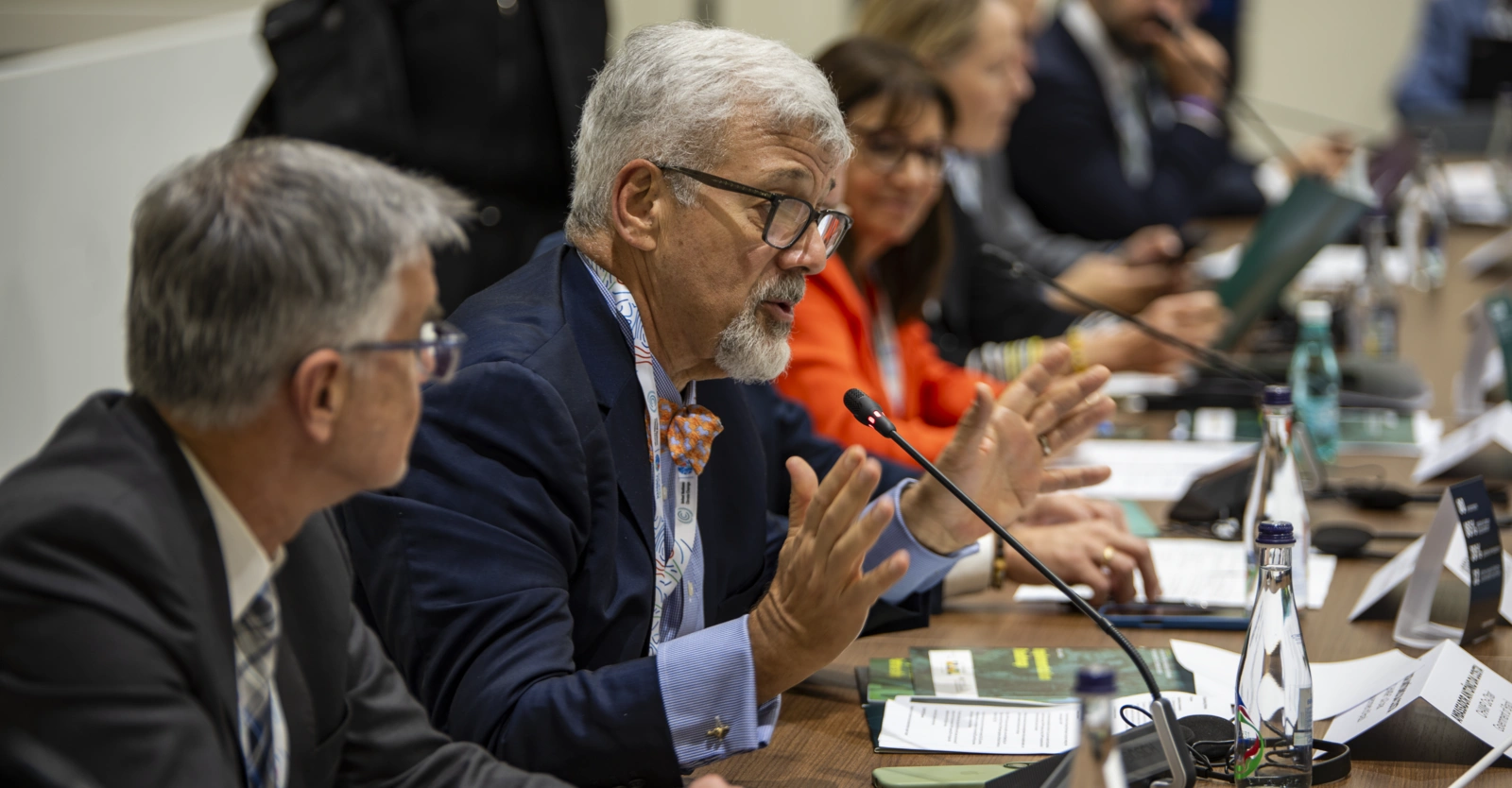
Antalya, Türkiye, November 11, 2026 – For the first time, national and subnational leaders within the Coalition for High Ambition Multilevel Partnerships (CHAMP) for Climate Action have united behind a shared call for stronger collaboration across all levels of government to turn climate ambition into delivery. The call comes in a joint statement issued today at COP31 by the chairs of CHAMP’s Steering Group and Subnational Advisory Council.
The statement comes as governments gather at COP31 to accelerate implementation of climate commitments. The statement sets out priorities across the three pillars of the CHAMP Implementation Roadmap:
- Strengthening multilevel climate governance, including greater recognition of subnational governments within the Second Global Stocktake (GST2) process and stronger use of local evidence and expertise in assessing climate progress;
- Catalyzing partnerships for local delivery, ensuring that Nationally Determined Contributions (NDCs), National Adaptation Plans (NAPs), and any sectoral targets and delivery plans agreed at COP31 identify how national and subnational governments will work together to implement them, including clear roles and delivery mechanisms;
- Scaling up and unlocking finance, including strengthening project preparation support, connecting local investment pipelines with financing opportunities and increasing access to climate finance for cities, states and regions.
Since its launch at COP28, CHAMP has grown into a coalition of 80 endorsers, including 79 national governments and the European Union, all committed to working more closely with cities, states and regions in the design and delivery of climate policy.
"Climate goals are only meaningful if they are positively impacting people's lives," said Ambassador Antônio Da Costa, CHAMP Co-chair and Chief International Advisor at Brazil's Ministry of Cities. "Cities, states and regions are where many climate solutions are delivered, from resilient infrastructure to clean mobility and adaptation. The CHAMP COP31 Statement is a call for national governments and subnational leaders to work as true partners, aligning ambition with implementation and turning climate commitments into tangible results for communities."
The joint statement highlights that while cities, states and regions are responsible for implementing many climate solutions, they remain underrepresented in climate decision-making processes and often lack access to adequate financing and institutional support.
"The next phase of climate action is not about setting goals alone, but about delivering them," said Dr. Ulf Jaeckel, CHAMP Co-chair and Head of the International Adaptation to Climate Change Division at Germany's Federal Ministry for the Environment, Climate Action, Nature Conservation and Nuclear Safety (BMUKN). "Experience shows that countries make faster progress when national, regional and local governments work together from planning through implementation. By endorsing the CHAMP COP31 Statement, we reaffirm that strong multilevel partnerships are essential to building resilience, accelerating decarbonization and achieving the objectives of the Paris Agreement."
The statement also emphasizes the need to strengthen links between climate planning and delivery, including efforts to connect national climate priorities with subnational investment pipelines and financeable projects.
"Cities and regions are where climate action becomes real," said Anne Hidalgo, Chair of the CHAMP Subnational Advisory Council and former Mayor of Paris. "They are delivering climate action every single day – by building affordable, climate-resilient housing, addressing the impacts of extreme heat and weather events, and ensuring vulnerable communities have access to clean and reliable energy. The CHAMP COP31 Statement reflects a growing recognition that national climate ambition can only succeed when all levels of government are involved. Stronger partnerships between national and subnational governments are not optional; they are essential for delivering the transition people need."
Members of the CHAMP Subnational Advisory Council, which includes mayors, governors and regional ministers, echoed the need for closer cooperation between national and local governments to accelerate implementation.
"Local governments are on the front line when climate impacts hit," said Mayor Alfredo M. Coro II of Del Carmen, Philippines. "Del Carmen's experience during the current El Niño shows how exposed communities can be — but also how quickly local governments can adapt policies, processes and technology to limit the damage. That is why I am proud to endorse the CHAMP COP31 Statement. When national and local governments work as partners, we can turn that speed and flexibility into delivery at scale."
"The CHAMP initiative is a crucial milestone driving the global climate action agenda," said Thekla Walker, Minister for the Environment, Climate and Energy Sector of the Federal State of Baden-Württemberg, Germany. "As co-founders of the Under2 Coalition, we know that subnational governments are at the forefront of implementing effective climate policies. Bridging the gap between national strategies and regional implementation is the only way to achieve our Paris Agreement targets."
"Climate action becomes more effective when national and subnational governments work together in an integrated way, strengthening climate federalism and promoting multilevel governance that brings together the responsibilities, resources and knowledge of different territories to deliver concrete results," said Eduardo Leite, Governor of Rio Grande do Sul, Brazil. "CHAMP plays an important role in strengthening this cooperation by recognizing cities, states and regions as key players in shaping and implementing climate policies and achieving global climate goals."